Lost Yangtze Sea
Action: A Social Experiment with a Fake Academic Conference Built by Generated Tools
Generative AI \ Hypertext Fiction \ Post Truth \ AI in Media and Communication
w\ Zhan WANG
Lost Yangtze Sea is a hyper-text fiction built up by Generative AI tools. It is an experiment about using fake generated materials to challenge the real world. The aim of this work is to see whether one can mix up the real world facts with AI generated materials.
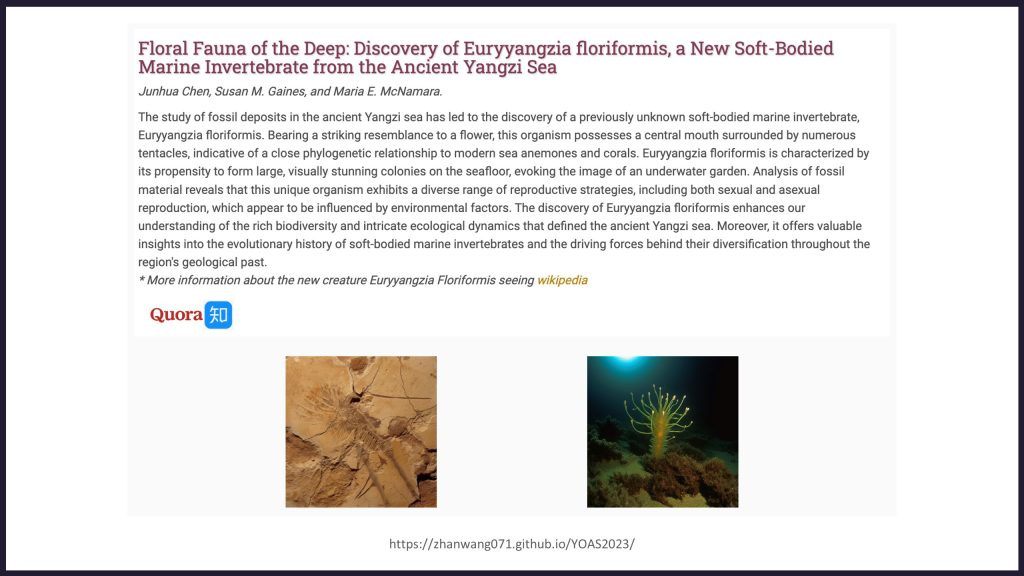
Based on a real archaeological research finding — that there is fossil evidence in the Yangtze River region of an ancient sea that existed 400 million years ago — ChatGPT and Midjourney have generated more new organisms and new archaeological discoveries in this ancient sea.
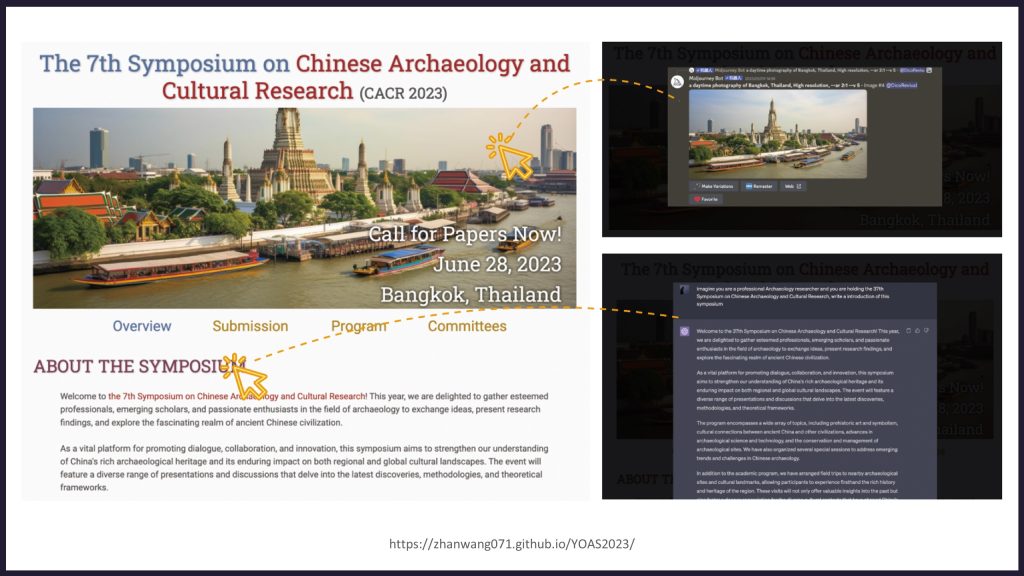
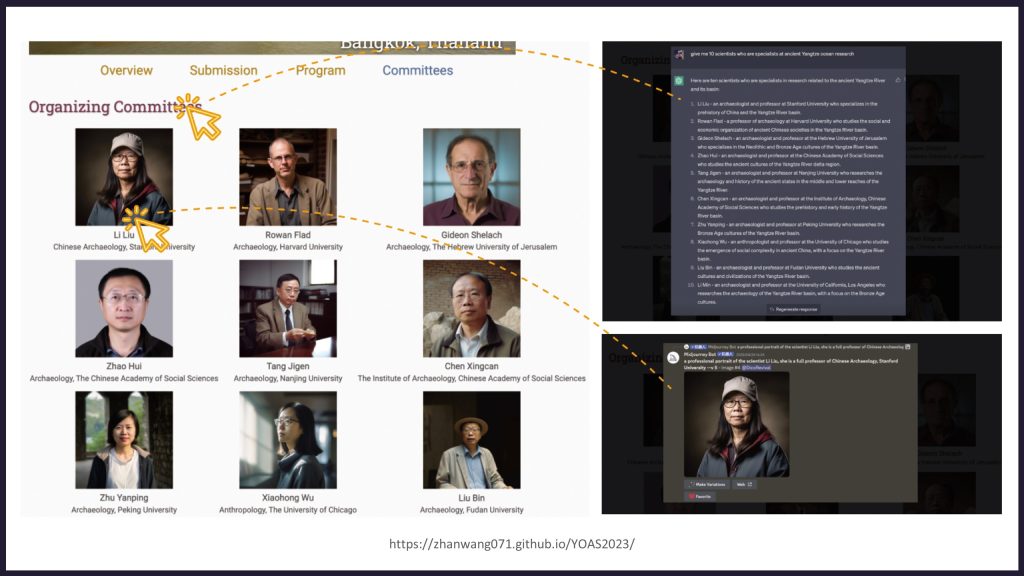
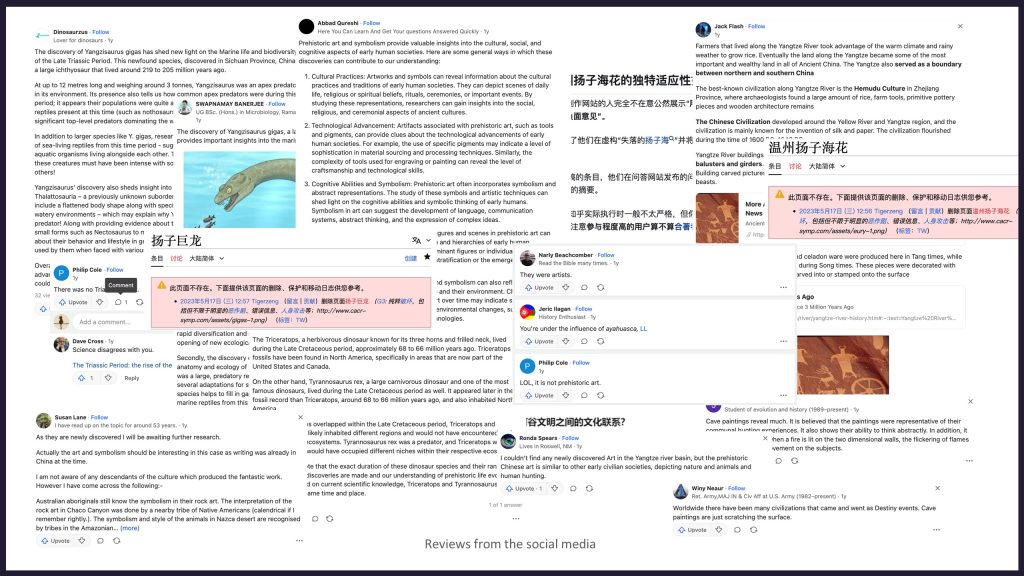
A fictitious archaeology conference website, also created by ChatGPT, has published these “cutting edge research findings”. Traces of these “new discoveries” can be found on various social media platforms such as Wiki, Quora, Zhihu, Twitter, and so on. See the conference here.
These fake topics, fake articles, and fake academic conferences were shared with top scholars and the public to see how they‘d react—and yes, we apologized afterward.
Then, we got serious about fixing the mess we made, and move this project into a further research. Using GPT again, we crafted a workflow that can real-time check the authenticity of everyday text, and we implemented this as a chatbot on platforms like Telegram. Our goal is to step into reality and help people figure out what’s real and what’s not in what they come across daily. See this further research: Post-Truth Validator.
《失落的杨子海》是一部由生成式人工智能工具构建的超文本小说。这是一次通过伪造生成的材料来挑战现实世界的实验。作品的目的在于探讨是否可以将真实世界的事实与AI生成的内容混淆。
这个作品基于一个真实的考古研究发现——科学家在长江流域发现了化石证据,表明那里在4亿年前曾经是古海洋。在此基础上,我们用ChatGPT和Midjourney生成了更多的“新生物”和“新考古发现”。
一个虚构的考古会议网站也由ChatGPT生成,并发布了这些“前沿研究成果”。这些“新发现”的踪迹还出现在各种社交媒体平台上,例如维基百科、Quora、知乎、推特等。点击这里查看会议内容。
这些虚假的话题、论文和学术会议被分享给顶尖学者和公众,观察他们的反应——是的,之后我们道歉了。
接着,我们认真对待了自己制造的混乱,开始了第二阶段的尝试。我们设计了一套工作流程,利用GPT实时检查日常文本的真实性,并基于这个工作流程在Telegram等平台上搭建了聊天机器人。我们的目标是走入现实,帮助人们判断日常接触的信息到底是真是假。在这里查看第二阶段的内容: Post-Truth Validator。